Iceland feels less like a country and more like a long-running experiment to see what happens when geology, folklore, and mild insanity coexist peacefully.
This is a place where the Earth is still under construction. Steam leaks from the ground like it’s thinking too hard. Mountains casually explode every few years. And somewhere between a lava field and a coffee shop, you’re expected to accept—without making a fuss—that invisible people might live in rocks. Welcome to Iceland, where the weird isn’t a sideshow; it’s structural.
A Country Built on a Crack (Several, Actually)

Iceland sits astride the Mid-Atlantic Ridge, where the North American and Eurasian tectonic plates are slowly, awkwardly drifting apart. This gives the island its signature personality disorder: glaciers on top, volcanoes underneath, and hot water bursting out wherever it feels like it.
There are around 130 volcanic mountains in Iceland, grouped into roughly 30 active volcanic systems—“active” meaning they’ve erupted at some point in the last 10,000 years, which geologically speaking is basically yesterday. Eruptions don’t happen constantly, but often enough that Icelanders treat them like inconvenient weather.
Geothermal areas like Hverir, near Lake Mývatn, look like a sci-fi movie set abandoned by NASA. Mud pots bubble ominously. Steam vents hiss. The air smells strongly of sulfur—nature’s way of reminding you that you are standing on a very thin crust and should probably behave.
The Hidden People (No, They’re Not a Tourist Gimmick)

Iceland’s relationship with elves—known as Huldufólk, or “hidden people”—is best described as respectfully noncommittal. Many Icelanders won’t tell you they believe in elves, but they also won’t tell you they don’t. And that distinction matters.
Stories of elves and trolls are deeply woven into Icelandic folklore, passed down through sagas and bedtime stories that involve far more lava and decapitation than most children’s books. Even today, tales persist of construction projects being delayed or rerouted after locals expressed concern about disturbing elf-inhabited rocks. It’s rarely official policy—but it’s also rarely dismissed outright.
If you’d like credentials in this field, Reykjavík is home to the Icelandic Elf School, where visitors can attend lectures on the hidden people and leave with a diploma in elf studies. It is unclear how this affects your career prospects, but spiritually, you’ll be unstoppable.
The Food Dares You to Be Brave

Icelandic cuisine is shaped by centuries of isolation, harsh winters, and a deep commitment to making sure nothing goes to waste. This explains hákarl, the infamous fermented Greenland shark.
Fresh Greenland shark is toxic. So Icelanders bury it, let it ferment for months, then hang it to dry. The result smells powerfully of ammonia and tastes like something you would only eat if dared—or deeply committed to cultural authenticity. It is traditionally chased with a shot of brennivín, Iceland’s signature schnapps, presumably to erase the memory.
Thankfully, redemption exists in the form of skyr, a thick, tangy cultured dairy product that is technically a cheese but socially a yogurt. Add a kleina, a twisted fried pastry dusted with sugar, and suddenly Iceland feels much more forgiving.
Museums That Ask Nothing of You—Except Emotional Resilience

Reykjavík is home to the Icelandic Phallological Museum, the world’s only museum dedicated entirely to penises. The collection includes specimens from land and sea mammals found in Iceland, presented with surprising scientific seriousness and absolutely no shame. It is educational. It is strange. It will stay with you.
For darker curiosities, head to Hólmavík, where the Museum of Icelandic Sorcery and Witchcraft explores the country’s history of magic, spells, and fearsome superstition. Among its exhibits is the legend of nábrók—trousers made from the skin of a dead man, worn to generate endless wealth. There are rules involved. None of them makes you feel better.
Light That Refuses to Behave Normally

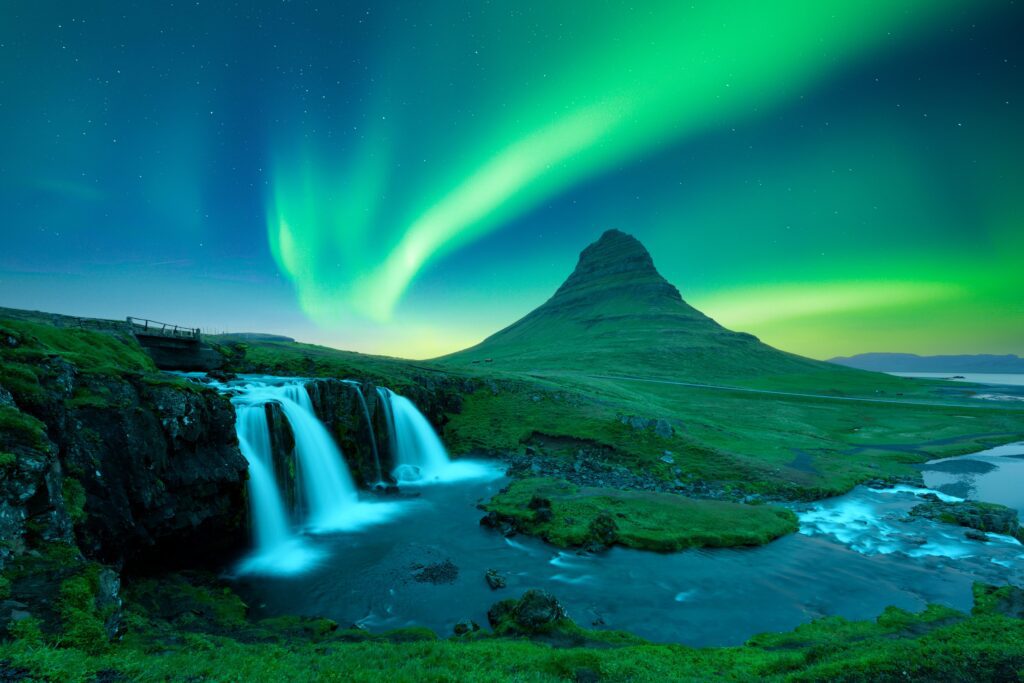
Iceland’s light is untrustworthy. In summer, the sun barely sets, hovering at the horizon like it forgot something. You can hike, eat dinner, and question your life choices at 2 a.m. in full daylight. In winter, daylight shrinks dramatically, but the darkness is often rewarded with the aurora borealis, rippling green and purple across the sky like the planet is quietly showing off.
The result is a place that never quite feels anchored in time. Days blur. Nights glow. Your internal clock gives up and goes home.
A Land That Doesn’t Pretend to Be Normal
Iceland doesn’t ask you to suspend disbelief—it simply asks you to coexist with uncertainty. The land shifts. The stories linger. The food challenges you. And somewhere between a moss-covered lava field and a gas station selling excellent hot dogs, you realize this is a country that never finished becoming ordinary.
Weird? Undeniably. Wonderful? In ways that are raw, strange, and deeply unforgettable.
Just remember: if someone asks you not to move that rock, it’s probably best not to ask too many questions.