Georgia O’Keeffe drove the same 60-mile stretch between Abiquiú and Ghost Ranch for decades and never seemed to tire of it. She painted that flat-topped mesa again and again, right up until she died at 98. People called it an obsession. More likely, she just understood the value of staying put long enough to really see a place.
This New Mexico road trip follows many of those same high-desert roads O’Keeffe loved—four unhurried days from Santa Fe up to Taos, then looping back through Abiquiú and the Jemez Mountains. It’s a small slice of the state, but it packs in mesas, red rock cliffs, volcanic fields, and light that changes everything by the hour.
You’ll spend maybe seven hours total behind the wheel. The rest of the time goes to green chile that clears your head, long soaks in mineral hot springs, and pulling over because the landscape somehow looks entirely different now that the sun has shifted.
Easily one of the best New Mexico road trips you can take, this route is designed to be taken slowly. Bring snacks, download a few podcasts, and resist the urge to over-plan. The best moments tend to happen in between.
Day 1: Albuquerque to Santa Fe
What to Do in Santa Fe
Start at The Plaza, the city’s social center since 1610. Grab a bench beneath the portal and do absolutely nothing for a bit. Native American artisans line the covered walkways selling turquoise jewelry, pottery, and textiles. Every vendor here is a member of a federally recognized tribe selling their own work, which makes this one of the most meaningful places in the city to shop.

A block east, the Cathedral Basilica of St. Francis of Assisi feels almost intentionally out of place next to the surrounding adobe. Built in 1869 in French Romanesque Revival style, it was designed to stand apart. Afternoon light pours through stained glass shipped from France, and the La Conquistadora Chapel holds a wooden Madonna from 1626, the oldest known representation of the Virgin Mary in the United States. The cathedral is open Monday through Saturday from 9am to 4:30pm.
Canyon Road compresses more than 100 galleries into half a mile. Trying to see all of them is a fast track to art fatigue. Pick one or two that genuinely interest you and spend time inside instead of rushing. You’ll get more out of it that way.
Where to Eat
For lunch, The Shed is a Santa Fe institution, serving Northern New Mexican food inside a historic 1692 hacienda. The red chile runs deep and smoky, while the green is brighter and sharper. Ordering Christmas, which gives you both, neatly avoids the city’s eternal red or green debate. Café Pasqual’s is another solid option, with a menu that changes based on what looked best at the market that morning. It is popular, and lunch waits are common, but the food makes up for it.
Afternoon Options
The Georgia O’Keeffe Museum downtown houses the largest collection of her work anywhere. Seeing the paintings before driving through the landscapes that inspired them adds context to everything you’ll see later on this trip. The museum is open daily from 10am to 5pm except Wednesdays, and adult tickets cost $22.

If museums aren’t calling your name, walk over to the Santa Fe Railyard District. Once an active rail hub, it’s now a mix of art spaces, shops, and a well-loved weekend farmers market. You can also circle back toward Canyon Road and let one more gallery pull you in, depending on your energy level.
Dinner and Lodging
For dinner, Market Steer Steakhouse offers classic cuts and cocktails without the stiffness that sometimes comes with a traditional steakhouse. La Boca takes a different approach, blending Mediterranean tapas with New Mexican flavors in a way that feels unexpected but works remarkably well.
When it comes to where to stay, Inn of the Five Graces is the most distinctive option, filled with Tibetan textiles, heated floors, and richly layered rooms that feel more like private sanctuaries than hotel spaces. La Fonda on the Plaza places you right in the center of the city, continuing a tradition of hospitality on that corner that dates back to 1610, with the current building opening in 1922. El Rey Court offers a more relaxed, retro stay in a restored 1930s motor lodge, complete with mid-century furnishings and a saltwater pool.
If you have a bit of extra time, stop by Loretto Chapel for something genuinely strange. Inside is a spiral staircase that appears to defy structural logic, with two full spirals, no central support, and reportedly built without a single nail. According to local legend, an unknown carpenter arrived in the 1870s, built the staircase, and disappeared without collecting payment or leaving his name. More than a century later, architects and engineers still debate how it works. Five dollars gets you inside to see it for yourself.
Day 2: Santa Fe to Taos via the High Road
Take the High Road on New Mexico Highway 76 through Chimayó, Truchas, and Las Trampas. These are old Spanish colonial routes threading through the foothills of the Sangre de Cristo Mountains, and this drive alone justifies the entire trip. The high desert rolls along gently at first, then without much warning you start climbing and the views open up in every direction.
The villages along the way still move at their own pace. Cordova is known for hand-carved woodwork. Truchas sits improbably high, with wide skies and very little separating you from the horizon. It feels remote in a way that is increasingly hard to find.
Santuario de Chimayó
Plan a stop at Santuario de Chimayó, about 28 miles north of Santa Fe. This small adobe church draws roughly 300,000 visitors a year, many of them coming for the so-called holy dirt found in el pocito, a small well tucked beside the main chapel.
According to local legend, a glowing crucifix was discovered buried in the hillside here around 1810. Each time the local priest moved it to his church in Santa Cruz, it mysteriously reappeared in Chimayó. After the third attempt, the message seemed clear and the chapel was built directly on the site.

Inside, a small room holds a shallow pit of dirt believed by some to have healing properties. The walls are covered with crutches, baby shoes, and handwritten notes left by people who say they were healed after visiting. Whether or not you believe the stories, the place carries a quiet intensity that’s hard to dismiss.
The chapel is open daily from 9am to 5pm, with shorter hours on Thanksgiving and New Year’s Day from 9am to 3pm. It is closed on Christmas, and admission is free. During Holy Week, especially on Good Friday, tens of thousands of pilgrims walk here from Santa Fe and beyond. If crowds are not your thing, choose literally any other week.
Where to Eat
Rancho de Chimayó is the classic stop along the High Road, serving Northern New Mexican food family-style inside an 1880s hacienda. Portions are generous, and it is easy to overdo it, so pace yourself. Once you reach Taos, Medley offers lighter, more modern fare that feels refreshing after a couple days of chile and cheese.
Taos Pueblo
Taos Pueblo deserves top billing once you arrive. This UNESCO World Heritage Site has been continuously inhabited for more than a thousand years, and the multi-story adobe buildings are still maintained using traditional methods.

Admission is $25 for adults and $22 for seniors, students, or groups of eight or more. Children ten and under enter free. The pueblo is generally open daily from 9am to 4pm, but it closes for roughly ten weeks in late winter and early spring, usually from late February through April, for ceremonial periods. If your visit falls anywhere near that window, call ahead at 575-758-1028 to confirm access.
About 150 people live here full time, which means this is not just a historic site but an active community. Stay out of restricted areas, ask before photographing anyone, and never take photos during ceremonies. Some homes also function as small shops selling pottery, jewelry, and bread baked in traditional hornos. If the bread is available, get it.
If you decide to skip the pueblo, spend time wandering Taos Plaza and the surrounding adobe streets instead. The Rio Pueblo de Taos Trail offers an easy riverside walk if you want to stretch your legs and slow things down.
Dinner and Lodging
For dinner in Taos, The Love Apple focuses on farm-to-table cooking inside a renovated 1800s chapel, keeping things intimate and seasonal. Lambert’s of Taos is the more classic option, offering polished fine dining that has been done well here for decades.
For lodging, El Monte Sagrado leans into wellness, with meditation gardens and a peaceful, retreat-like feel. Taos Inn places you right in the historic downtown core, making it easy to walk to restaurants, shops, and live music. Adobe and Pines Inn is a quieter alternative just outside town, known for its relaxed atmosphere and included breakfast.
If you find yourself with extra time, the Kit Carson Home and Museum offers a look at the region’s complicated past. Carson was a frontiersman and Indian agent whose legacy depends entirely on who is telling the story. Admission is around $10, and the context is worth the stop.
Day 3: Taos to Abiquiú
Leave Taos heading south on NM-68, then turn left onto US-84 toward Abiquiú. Somewhere along this stretch, the road trip quietly changes tone. The high desert opens up in a way that feels almost overwhelming at first. The sky gets wider, the land flattens and stretches, and the silence feels physical. Slow down and let it register. This is one of those drives where the landscape does most of the talking.
Ghost Ranch
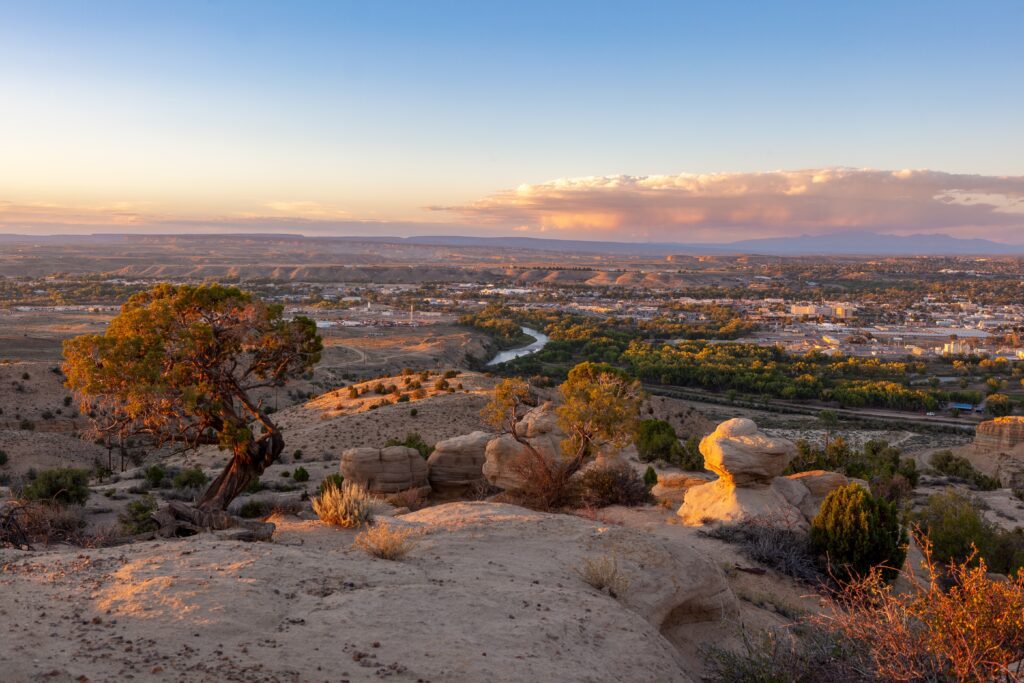
Ghost Ranch sits directly off US-84 between mile markers 224 and 225. Spread across 21,000 acres, its red and yellow cliffs are instantly recognizable as the landscapes Georgia O’Keeffe painted obsessively, returning to the same forms under different light and weather again and again.

The ranch is open daily from 7:30am to 6pm, and a $10 day pass gives you access to the trail system. The Ghost Ranch Café is open Wednesday through Monday from 9am to 4pm if you need a meal or a break.
Two of the most popular hikes are easy to manage. Kitchen Mesa Trail is about three miles round trip and leads to a dinosaur quarry where Coelophysis fossils were discovered in the 1940s. Chimney Rock Trail runs roughly 3.5 miles round trip to a dramatic rock spire that you can already see from the parking area. There are also two small museums on-site focused on anthropology and paleontology, featuring discoveries made right on the property.
Plaza Blanca
Plaza Blanca does not look real. White sandstone formations twist into hoodoos and spires that feel more imagined than natural. O’Keeffe painted here as well, calling it the White Place. The gypsum and clay glow brightest in late afternoon, shifting from pale white to warm orange as the sun drops lower. Even a short walk among the formations is enough to leave an impression.
Where to Eat
Bode’s General Store keeps things refreshingly straightforward. Burgers, sandwiches, and homemade pie are served inside a place that has been operating as a real community general store since 1946. It is open daily from 7am to 7pm and makes an easy lunch stop. For dinner, The Café at Abiquiú Inn offers solid food paired with wide valley views. Dinner service runs Wednesday through Sunday from 5pm to 8pm.
Georgia O’Keeffe Home and Studio
The Georgia O’Keeffe Home and Studio requires advance planning. Tours often sell out weeks ahead of time, especially during peak seasons. They operate from March through November and last about 75 minutes, starting at the O’Keeffe Welcome Center in Abiquiú at 21120 US-84. The welcome center itself is free to visit and open Tuesday through Sunday from 9am to 4pm.
O’Keeffe purchased this crumbling Spanish Colonial compound in 1945 and spent four years restoring it. She lived here from 1949 until 1984, when declining health forced her to leave. Tours include her studio, bedroom, kitchen, and the garden she designed herself. Prices range from $35 to $65 depending on the tour. Even if you cannot secure a spot, the welcome center’s rotating exhibitions and well-curated museum store are worth stopping for.
If tours are sold out or you are visiting in the off-season, simply standing in the surrounding landscape explains why she stayed for nearly half a century. Another low-effort option is pulling off along US-84 near the Chama River, where informal access points let you wander and take in the view.
Dinner and Lodging
For dinner, the Abiquiú Inn Dining Room serves refined, thoughtful food without any unnecessary fuss. It is a relaxed place to end the day and is open Wednesday through Sunday.
For the night, Abiquiú Inn offers quiet rooms with expansive valley views and a peaceful, low-key atmosphere. Ghost Ranch Lodging is a more rustic option, simple and serene, with the added benefit of waking up surrounded by those unmistakable cliffs.
If you still have daylight and energy, Echo Amphitheater makes an easy side trip about 20 minutes north on US-84. This natural sandstone bowl has strange, powerful acoustics. Say something out loud and listen to it come back altered. It is free to visit and surprisingly fun.
Day 4: Abiquiú to Albuquerque via Jemez Springs
Leave Abiquiú heading east on NM-96, then connect to NM-126 south through the Jemez Mountains toward Jemez Springs. This stretch consistently ranks among New Mexico’s most underrated scenic drives. Most people opt for the faster interstate and never see it. The road winds through ponderosa pine forests, passes bands of red rock, and traces the Jemez River for long, quiet stretches that invite you to slow down.
Jemez Springs
Jemez Springs sits tucked inside a narrow canyon carved by the river, with red rock walls rising close on either side. Geothermal activity below the surface feeds hot springs throughout the area, and several bathhouses and natural soaking spots operate in and around town.

The Jemez Historic Site preserves the remains of a 500-year-old pueblo along with a 17th-century Spanish mission church. It is open Wednesday through Sunday from 8:30am to 5pm. Admission is $5 for adults and free for children under 17. The site is compact but offers a clear sense of how long people have lived and adapted in this landscape.
Just north of town, Battleship Rock rises abruptly beside the road. There is free access, a short riverside walk, picnic tables, and a rock formation that vaguely resembles a battleship if you are willing to squint a little.
Where to Eat
Los Ojos Restaurant and Saloon leans into its rustic setting inside a building that dates back to 1907. The menu sticks to New Mexican staples along with burgers and steaks, and it is open daily for lunch and dinner. Jemez Mountain Brewhouse offers a more casual stop, pouring house-brewed beer alongside pizza and pub-style food in a small, friendly space that fills up quickly.
Hot Springs Options
If soaking is part of your plan, Jemez Hot Springs operates a traditional bathhouse with private tubs filled with natural mineral water. Reservations are required, and rates typically run between $25 and $35 per person per hour.
For a more rustic experience, Spence Hot Springs is free and undeveloped, reached by a short hike from a parking area off NM-4. The clothing-optional pools are carved into rock beside the river and can get crowded, especially on weekends, so arriving early helps. San Antonio Hot Springs is another free option, but it requires a longer hike of about five miles round-trip. It is quieter and more secluded, but you earn every minute of the soak.
Albuquerque Arrival
Once back in Albuquerque, Campo at Los Poblanos is a strong dinner choice, focusing on farm-to-table dishes sourced largely from the property’s own 25-acre organic farm. Antiquity Restaurant offers a more traditional French and Continental menu inside a historic home, making it a fitting final-night splurge.

For lodging, Los Poblanos Historic Inn and Organic Farm delivers a calm, luxurious stay surrounded by lavender fields and gardens. Hotel Andaluz places you downtown in a beautifully restored 1939 building. Nob Hill Hotel sits along Route 66 in a quieter neighborhood, with easy access to local restaurants and shops.
If you still have energy, make one last stop at Petroglyph National Monument in Boca Negra Canyon. More than 20,000 petroglyphs carved by ancestral Puebloan people and early Spanish settlers line the basalt cliffs here. Three short trails offer good viewing, and the site is open daily from 8am to 5pm. Vehicle entry typically costs between $1 and $2.
Optional Day 5: Albuquerque to White Sands National Park
White Sands National Park covers 275 square miles of blindingly white gypsum dunes, making it the largest gypsum dunefield on Earth. It sits about three and a half hours south of Albuquerque and feels completely disconnected from everything around it, in the best possible way.
Entry costs $25 per vehicle and is valid for seven days. Motorcycles pay $20, and walkers or cyclists pay $15 per person. Children 15 and under enter free. The park is generally open daily from 7 am to sunset, but it does close periodically for military testing on the neighboring White Sands Missile Range. Those closures are non-negotiable and fairly common, so check the park’s website before committing to the drive.

The eight-mile Dunes Drive loops deep into the heart of the dunefield and includes five parking areas. From any of them, you can walk straight into the dunes. Once you leave the boardwalk near the visitor center, there are no marked trails. You just pick a direction and go. One unexpected perk is that gypsum sand reflects sunlight instead of absorbing it, which means it stays relatively cool even on hot days.
Preparation matters here. Bring more water than you think you need, since there is none beyond the visitor center. The sun reflecting off the white sand accelerates dehydration fast. Sunscreen, sunglasses, and a hat are not optional unless you enjoy learning hard lessons.
Sledding down the dunes is allowed and very much encouraged. Lightweight plastic snow saucers work best. You can buy them at the gift shop for around $15 to $20 or bring your own if you have space.
The park also offers ranger-led programs throughout the year, including full moon hikes held once a month from March through November. These require advance tickets through Recreation.gov and tend to sell out quickly, especially during peak seasons.
Where to Stay
If you are staying overnight nearby, the White Sands Motel in Alamogordo is a straightforward, budget-friendly option that covers the basics without any extras. Hampton Inn and Suites Alamogordo offers a more familiar chain hotel experience, with reliable amenities and an easy check-in after a long drive.
This optional extension adds significant driving for a single destination. It only really makes sense if you have the extra day and a strong desire to see the dunes. If you do, they deliver something you will not find anywhere else in the state.
Planning Your New Mexico Road Trip
Best Time to Go
- Spring (April–May)
Daytime temperatures hover in the 60s and 70s, wildflowers start blooming, and crowds are lighter. Some higher elevation roads may still have snow early in the season, especially in April. - Summer (June–August)
Hot, with temperatures often in the 80s and 90s or higher. All roads are open and daylight lasts well into the evening. Afternoon thunderstorms roll through in July and August, bringing dramatic skies. This is the busiest time of year. - Fall (September–October)
One of the best times to visit. Temperatures return to the 60s and 70s, cottonwoods turn gold, and the light becomes especially good for photography. This is peak season, so book lodging early. - Winter (November–March)
Cold mornings in the 30s to 50s, striking light, and very few visitors. Snow transforms the landscape, especially around red rock areas. Some roads and attractions may close depending on conditions.
The high desert changes completely with the seasons. Spring brings wildflowers, summer storms build towering cloud formations, fall delivers those golden cottonwoods everyone photographs, and winter snow reshapes the terrain into something quieter and more dramatic.
What to Pack
- Clothing
Layers are essential for 30- to 40-degree temperature swings between morning and afternoon. Bring a light jacket for early mornings and evenings, comfortable walking shoes, and sandals if you plan to visit hot springs. - Gear
Sunscreen is non-negotiable at this altitude. Pack sunglasses with UV protection, lip balm with SPF, a refillable water bottle, and a camera or phone fully charged.
Why This New Mexico Road Trip Works
The high desert creates natural pause points. You will pull over without planning to, windows down and music off, just watching how the light hits a cliff face. The best New Mexico road trips reward detours and unplanned stops.
The afternoons spent doing nothing often end up mattering more than the sights you drove hours to see. Pack your sunglasses, bring layers, and leave your schedule flexible enough to follow whatever catches your attention. That is usually where the good stuff happens.