Most houses aren’t tourist attractions.
Frank Lloyd Wright’s are a different story. From Pennsylvania’s famous Fallingwater to a hidden architectural gem in Alabama, these eight homes offer a chance to step inside the work of America’s most celebrated architect.
1. Fallingwater, Mill Run, Pennsylvania
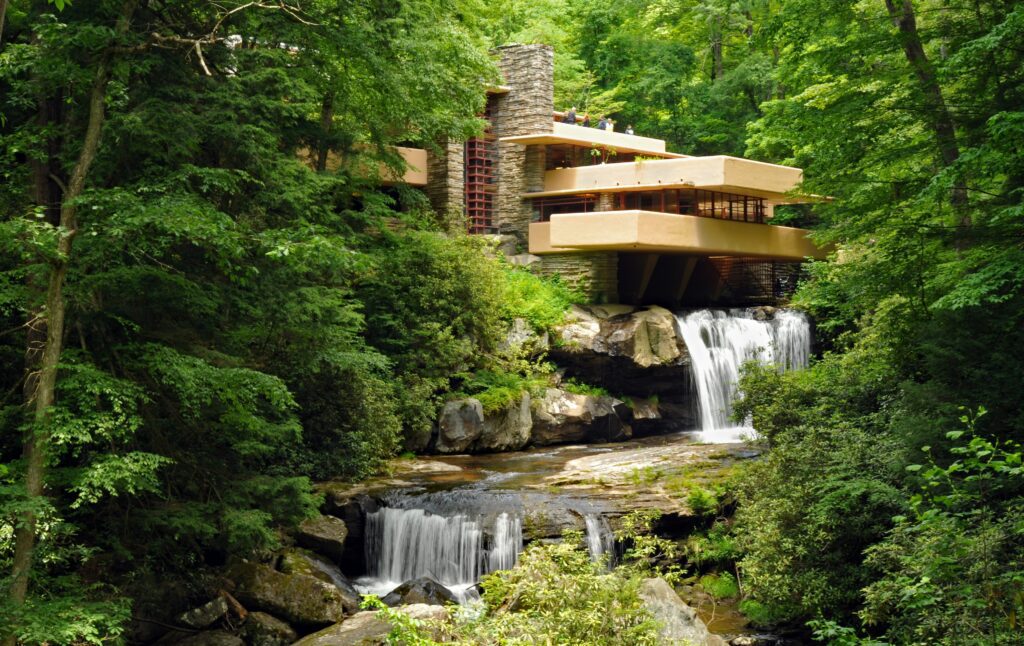
If there’s one Frank Lloyd Wright home everyone should see at least once, it’s Fallingwater.
Built in 1935 as a weekend retreat for Pittsburgh department store owner Edgar Kaufmann and his family, the home seems to hover above Bear Run thanks to its dramatic cantilevered terraces. Instead of placing the house where occupants could look at the waterfall, Wright did something bolder: he built it directly over the falls.
Local sandstone helps the structure blend into the surrounding forest, creating what many consider the ultimate example of Wright’s philosophy of organic architecture. The American Institute of Architects later named Fallingwater the “best all-time work of American architecture.”
Today, Fallingwater is a UNESCO World Heritage Site and National Historic Landmark that welcomes visitors through guided tours.
2. Taliesin, Spring Green, Wisconsin
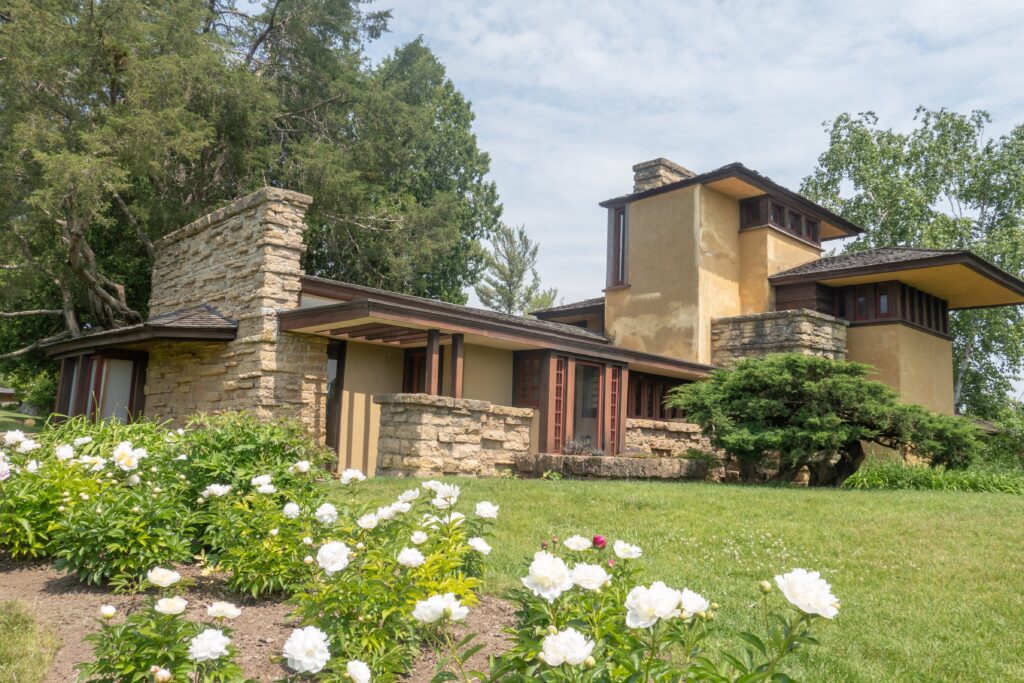
More than a home, Taliesin was Frank Lloyd Wright’s personal world.
Located on an 800-acre estate in Wisconsin’s Driftless Region, Taliesin served as Wright’s residence, studio, school, and creative laboratory for decades. The property evolved continuously from 1911 through the 1950s, with Wright repeatedly modifying and expanding the estate throughout his career.
The estate also carries a dramatic history. After devastating fires and personal tragedies, Wright rebuilt sections of Taliesin multiple times, resulting in a property that reflects different phases of his architectural evolution.
Visitors can explore the home, studio spaces, grounds, and other buildings that provide an unusually personal glimpse into Wright’s life. Taliesin is also recognized as a UNESCO World Heritage Site and National Historic Landmark.
3. Taliesin West, Scottsdale, Arizona
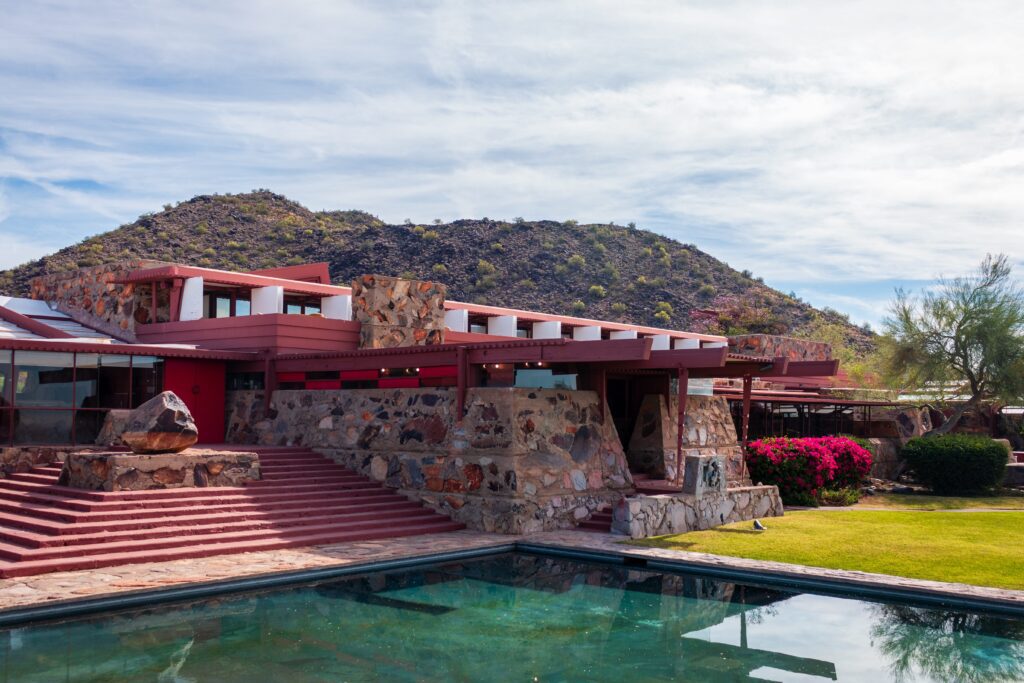
When Wisconsin winters became too cold, Wright headed for the desert.
Established in 1937 in the foothills of the McDowell Mountains, Taliesin West became Wright’s winter home and studio. Built with local stone and desert materials, the property was designed to work with the harsh Sonoran Desert environment rather than fight against it.
Wright described it as a kind of desert laboratory, where he and his apprentices experimented with ideas tailored to the Southwest. Open-air spaces, geometric forms, canvas-inspired roof structures, and sweeping desert views remain defining features today.
Now home to the Frank Lloyd Wright Foundation, Taliesin West continues to host educational programs while welcoming visitors for tours. It is both a UNESCO World Heritage Site and National Historic Landmark.
4. Robie House, Chicago, Illinois
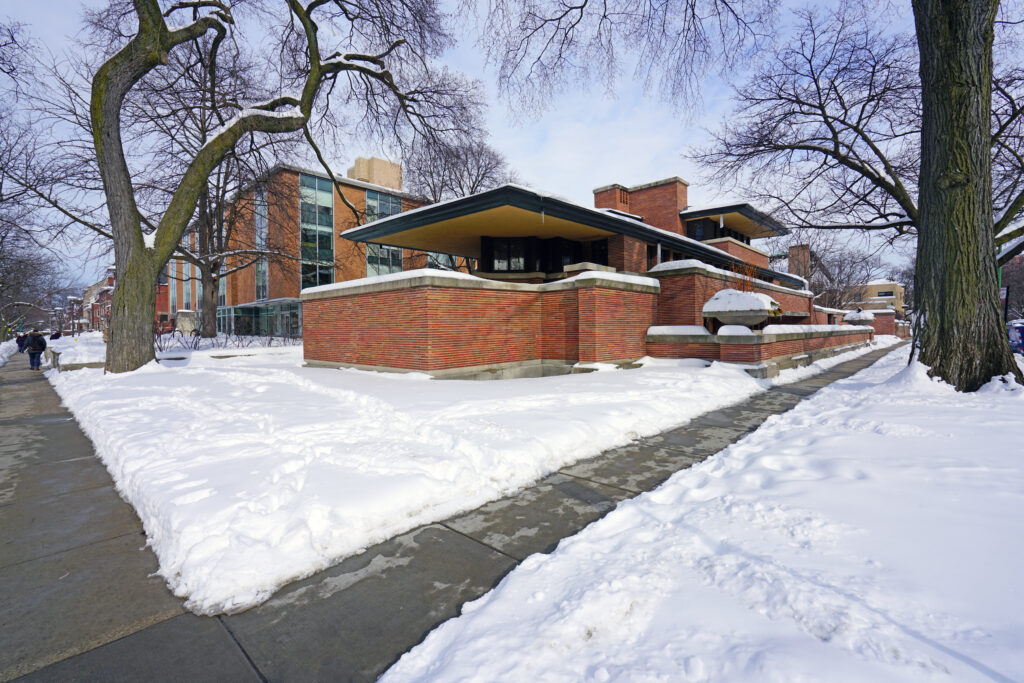
Many architects consider Robie House the ultimate Prairie-style home.
Completed in 1910 for businessman Frederick C. Robie, the house transformed residential design with its strong horizontal lines, expansive roof overhangs, and flowing interior spaces. The design was a sharp departure from the compartmentalized homes common at the time.
Wright paid attention to nearly every detail, creating custom furniture, decorative art glass, and built-in elements that worked together as a complete design.
Located in Chicago’s Hyde Park neighborhood near the University of Chicago, Robie House remains one of Wright’s most influential works and is part of the UNESCO-listed collection of Wright sites.
5. Hollyhock House, Los Angeles, California
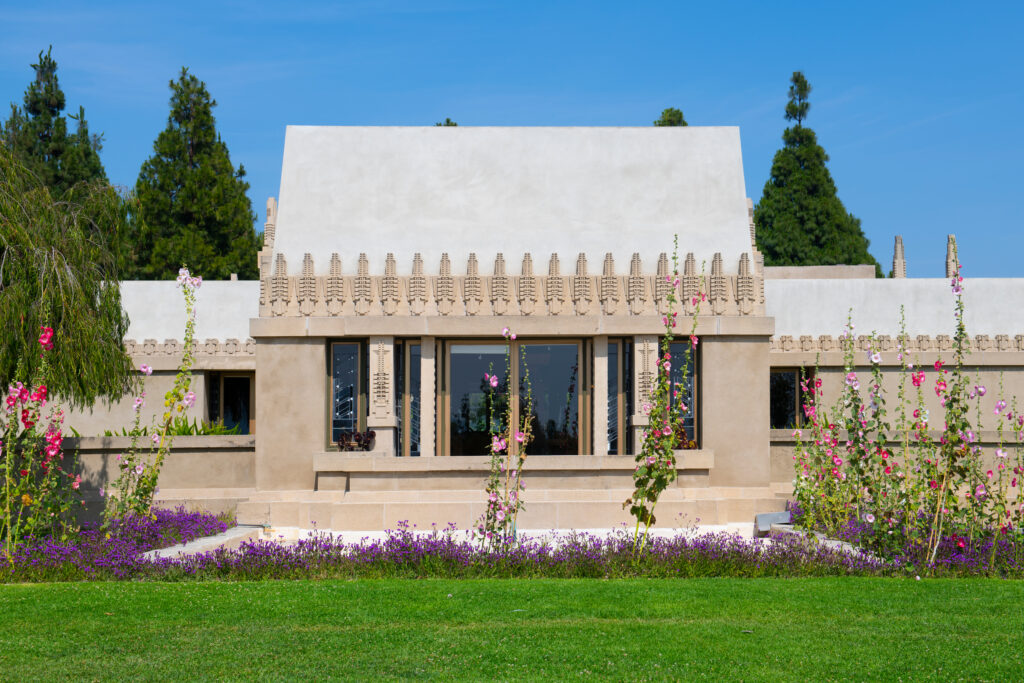
Southern California architecture would never be quite the same after the Hollyhock House.
Built between 1919 and 1921 for oil heiress and arts patron Aline Barnsdall, the home introduced many Angelenos to Wright’s unconventional design ideas. Its name comes from Barnsdall’s favorite flower, the hollyhock, which appears throughout the property in stylized decorative motifs.
Unlike Wright’s Prairie homes, Hollyhock House pulls inspiration from a variety of sources, including ancient Mayan forms, Egyptian motifs, and emerging California modernism. The result is one of the architect’s most distinctive residential designs.
Situated within Barnsdall Art Park, the property offers impressive city views and holds the distinction of being Los Angeles’ first UNESCO World Heritage Site.
6. Darwin D. Martin House, Buffalo, New York
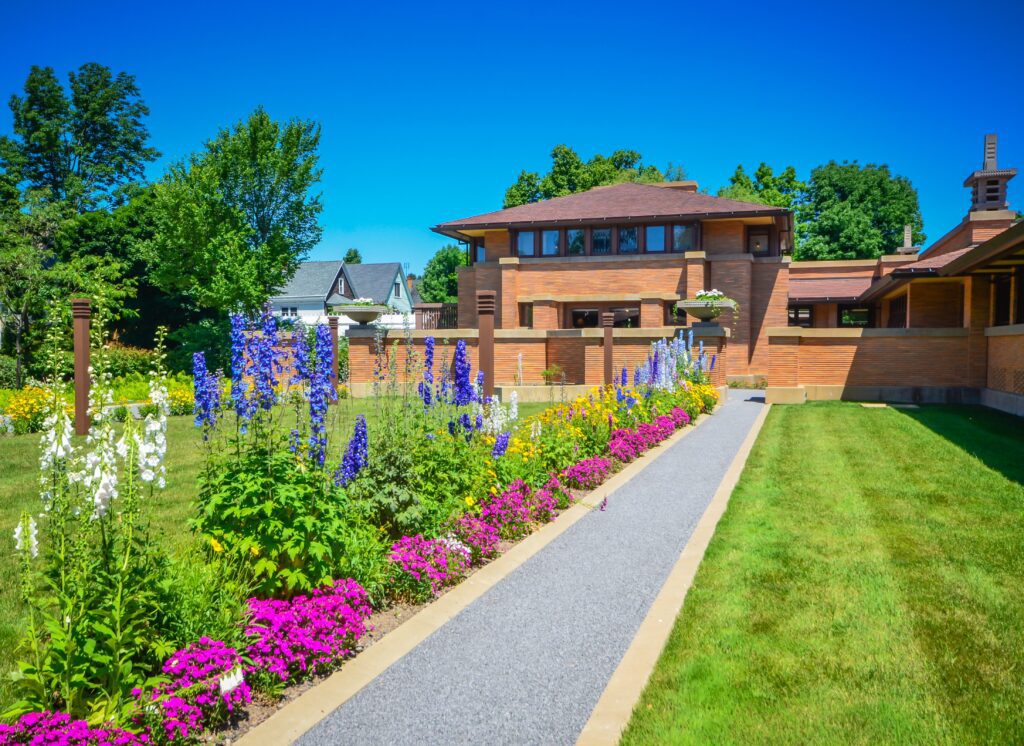
For sheer scale and ambition, few Wright homes can match the Martin House.
Built between 1903 and 1905 for Buffalo executive Darwin D. Martin, the property was conceived as a unified campus rather than a single residence. The sprawling complex includes multiple structures connected through carefully planned sightlines and architectural details.
Highlights include a dramatic pergola, conservatory, extensive art glass windows, and custom-designed furnishings that showcase Wright’s meticulous attention to detail.
A massive restoration project returned previously demolished sections of the estate to their original appearance, helping preserve one of the most significant Prairie-style commissions of Wright’s career. Today, visitors can experience the property through a variety of guided tours.
7. Kentuck Knob, Chalk Hill, Pennsylvania
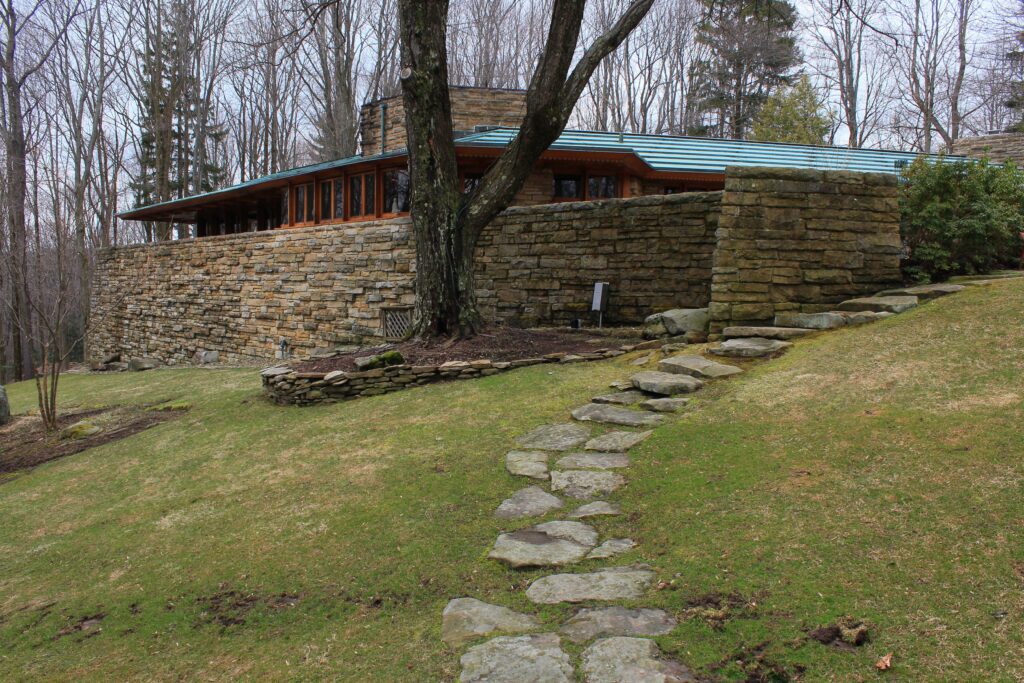
Just a short drive from Fallingwater sits another Wright masterpiece that often flies under the radar.
Completed in 1956 for the Hagan family, Kentuck Knob represents Wright’s later Usonian period. Built into a wooded hillside in Pennsylvania’s Laurel Highlands, the home was carefully positioned to capture sunlight, mountain views, and a strong connection to the surrounding landscape.
Native sandstone, red cypress, and copper roofing help the structure blend naturally into its setting, while the home’s distinctive hexagonal geometry showcases Wright experimenting with new forms late in his career.
The grounds feature outdoor sculptures and walking paths, making it easy to turn a visit into a full afternoon of exploration.
8. Rosenbaum House, Florence, Alabama
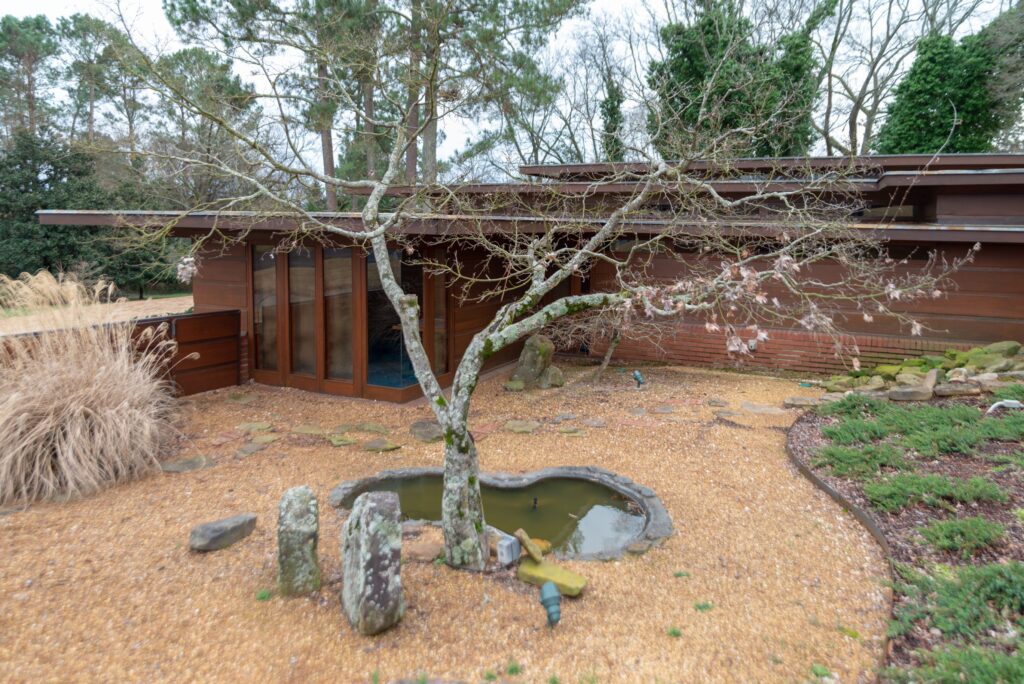
Want to see Wright’s vision for everyday American living? Head to Alabama.
Built in 1939 for Stanley and Mildred Rosenbaum, the Rosenbaum House is widely regarded as one of the finest surviving examples of Wright’s Usonian concept, a housing style intended to make modern design more accessible to middle-class families.
The home features efficient use of space, built-in furnishings, abundant natural light, and a strong relationship between indoor and outdoor areas. Every square foot was carefully considered.
It’s also the only Frank Lloyd Wright-designed building in Alabama. After a meticulous restoration, the home now operates as a museum, giving visitors an intimate look at how Wright imagined the future of American residential design.
Which Frank Lloyd Wright Home Should You Visit First?
If you’re after the bucket-list experience, Fallingwater remains the undisputed star. For a deeper understanding of Wright’s personal life and creative process, Taliesin and Taliesin West offer unmatched insight. And if you prefer discovering lesser-known gems, Kentuck Knob and the Rosenbaum House deliver plenty of architectural magic without the crowds.
No matter which one you choose, these homes prove that great design never goes out of style.